For general information contact the DDD at DDD2@brla.gov or (225) 389-5520.
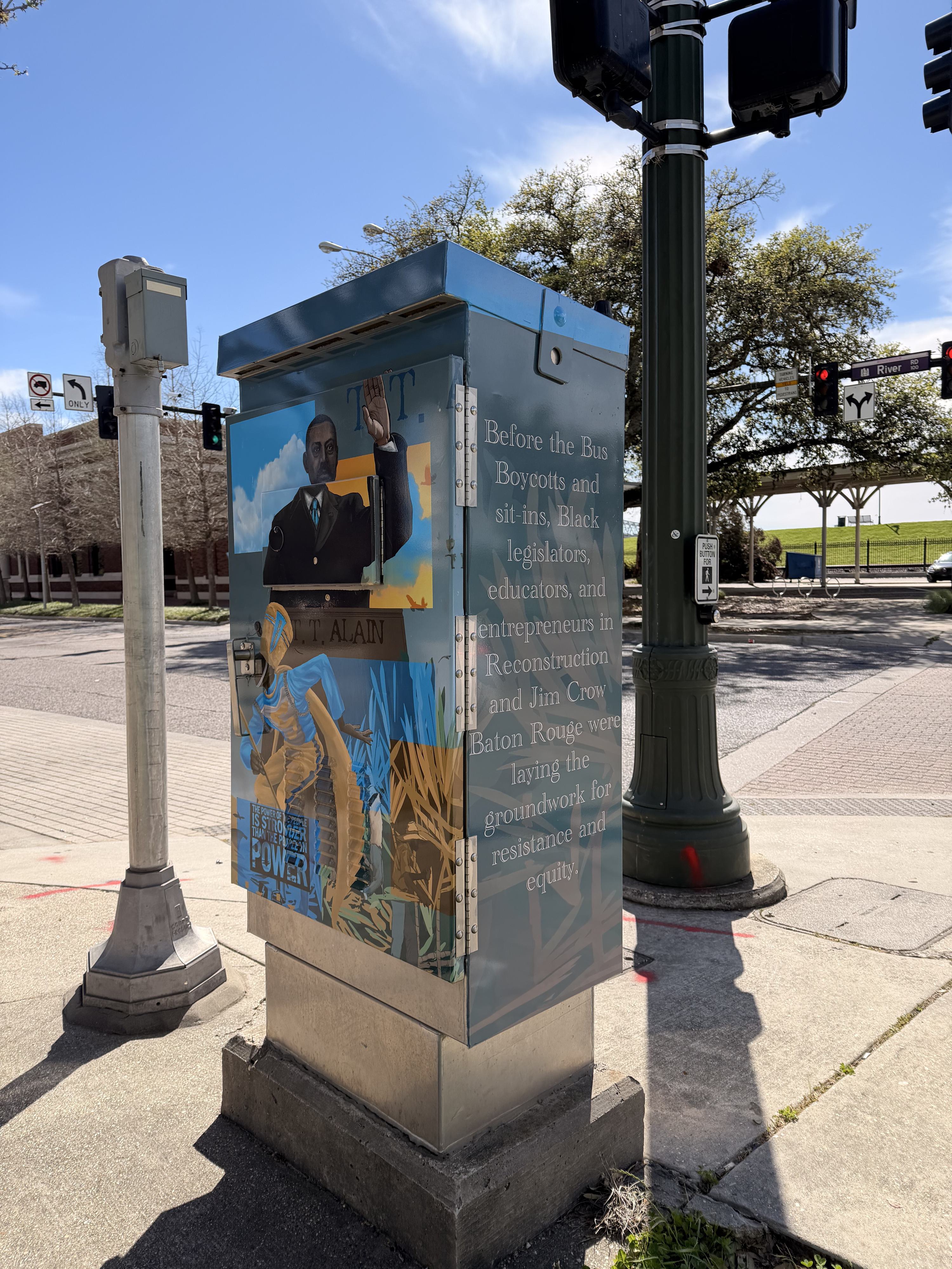
Box 1 - Pre-Movement Activism
Before the bus boycotts and sit-ins, Black legislators, educators and entrepreneurs during Reconstruction and Jim Crow Baron Rouge were laying the groundwork for resistance. Figures like J. Henry (Henri) Burch and T.T. Allain fought for voting rights, founded schools, and challenged segregation decades before the Civil Rights Movement. T.T. Allain and others were a part of the Unification Movement which was a coalition of Blacks and whites with the aim of politically breaking through racial barriers.
Learn More
West Baton Rouge Museum Video (T.T. Allain and the Reconstruction Era)
3 The Hope of Education
https://www.westbatonrougemuse...
https://www.westbatonrougemuse...
https://la-westbatonrougeparis...

Box 2 - Garner v. Louisiana
In 1960, Attorney Johnnie A. Jones defended Southern University students who were arrested during lunch counter sit-ins. Thurgood Marshall and A.P. Tureaud of the NAACP represented the students, even though they initially disagreed with the actions of the students in remaining in jail for the sake of a constitutional law challenge to segregation. Garner v. Louisiana is recognized by the Supreme Court Historical Society as one of the most significant oral arguments before the U.S. Supreme Court spanning the years 1955 -1993 under the Warren Court. “The primary holding and unanimous decision of the case was that under the Due Process Clause of the Fourteenth Amendment, a state cannot apply its criminal statues on disturbing the peace to non-violent protestors staging a sit-in to express opposition to segregation by race.” Justice Harlan’s concurrence included 1st Amendment rights in that the act of sitting in as a form of non-violent peaceful protest is an exercise of freedom of speech as protected under the 1st Amendment. It was the first case before the U.S. Supreme Court stemming from the Sit-In Movement. The Baton Rouge Sit-Ins took place at three separate lunch counters at Kress consisting of seven students (March 28, 1960), where there is a marker that is dually designated as a Louisiana Civil Rights Trail Marker and U. S. Civil Rights Marker, Sitman’s Drug Store, two students (301 Main Street), as well as the old Greyhound Bus Station, seven students (212 St. Phillip Street) on March 29, 1960 which buildings are no longer existent. The students were expelled from Southern University on March 29, 1960. Governor Earl K. Long stated that if the students were dissatisfied with their treatment in Louisiana, they should return to Africa and went so far as to say that he would contribute toward the cost of the boat. The ruling of the case took place on December 11, 1961. Other such cases would soon follow, such as Cox v. Louisiana, in which demonstrations took place on December 14, 1961, days after the Garner ruling in the same area of Downtown Baton Rouge because while the court had ruled in the matter, there was an intentional failure to uphold the ruling and the practice of segregation by race remained unchanged. While the case overturned the convictions, the expulsions of the students remained. While the State of Louisiana and Southern University have bestowed honors on the 16 students, to date no apologies have been issued from the State of Louisiana or Southern University.
Learn More
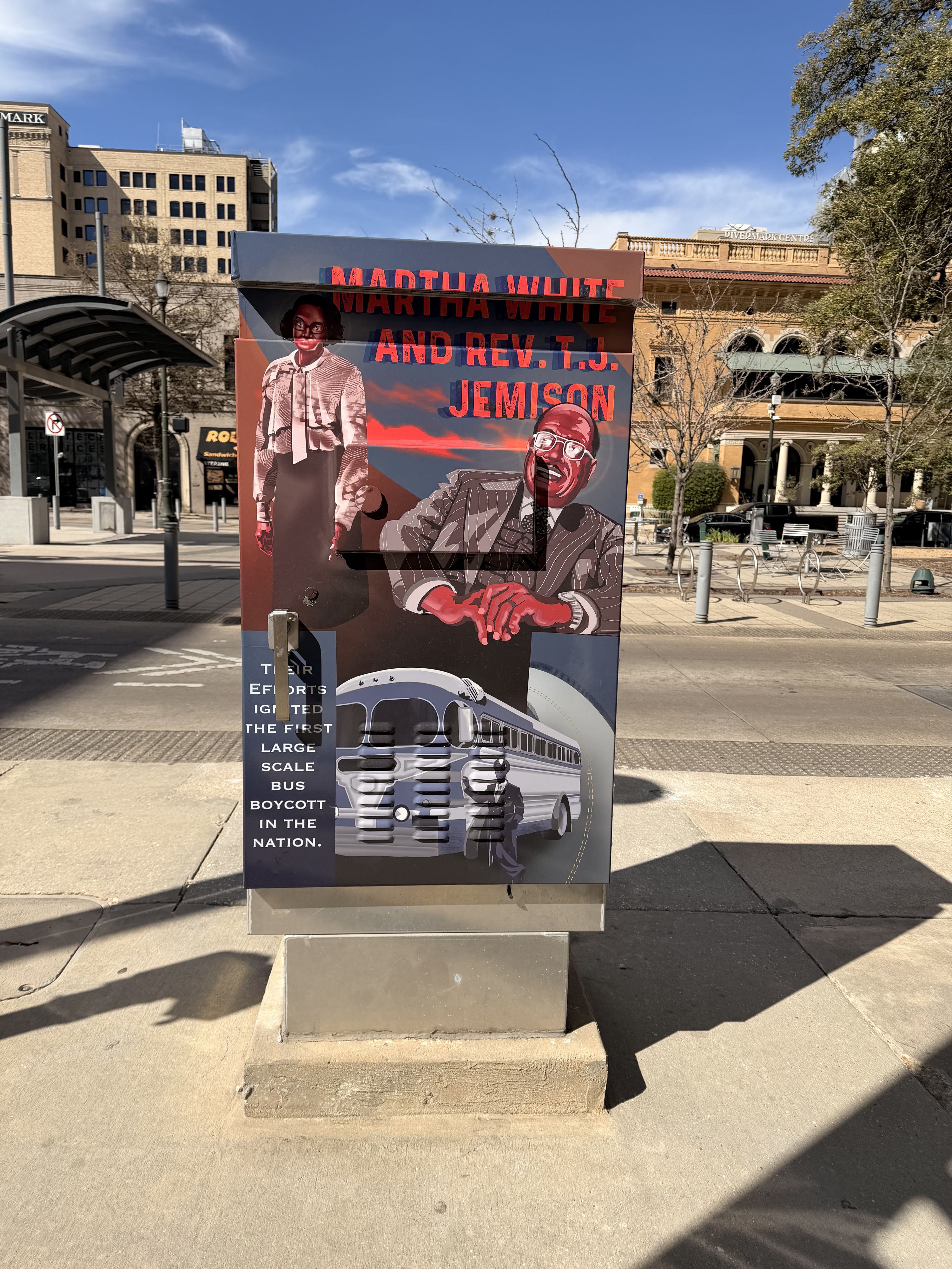
Box 3 - Baton Rouge Bus Boycott
Martha White - Martha White was the first in Baton Rouge to not give up her seat on June 15, 1953, two years before the Montgomery Bus Boycott. Another woman supported Martha White’s decision and encouraged others riding the bus to join in an act of solidarity. Martha White had the right to remain seated based upon Ordinance 222 championed by T.J. Jemison, with unanimous support from the Council and supported by the management of the bus company, though the bus drivers refused to honor Ordinance 222. This chain of events led to the Baton Rouge Bus Boycott that started on June 19, 1953, almost financially collapsing the bus company in days. Dr. Martin King eventually came to Baton Rouge and learned from the leaders and community in Baton Rouge concerning the bus boycott. He would take the blueprint and apply it to the Montgomery Bus Boycott of 1955. While Baton Rouge Boycott was the blueprint for the Montgomery Bus Boycott, unfortunately this has been lesser-known history and this stands so that Baton Rouge, Martha White, T. J. Jemison, community leaders and the Black community in Baton Rouge can assume their rightful place in history.
In 1950 the City Council revoked the licenses of about 40 black-owned bus companies. This created an intentional monopoly. “Full and fair” services for all were pledged; however, that could not exist due to segregation. Three years later the bus fare increased. Rev. T.J. Jemison approached the City Council and within two weeks of the increase, Ordinance 222 passed unanimously without noted opposition and with the full support of the bus company. This ordinance allowed riders to fill the bus on a first come, first served basis, Blacks from the back and whites from the front. For three months the bus drivers refused to honor Ordinance 222. Rev. Jemison and the head of the local NAACP advised riders of their new rights. From this informed ridership came forth Martha White, who sat down and refused to give up her seat. She was threatened with arrest when demanded by the bus driver to get up. There were other ladies on the bus that joined saying they were going to stick together. Ordinance 222 was upheld and the driver suspended. This led to a 4-day strike by the bus drivers who were in violation of Ordinance 222. They sought the support of the Louisiana Attorney General who issued an opinion that the ordinance violated Louisiana’s segregation laws and overturned it.
The Baton Rouge Bus Boycott, a local effort seeking local change was the first large scale bus boycott in the nation and became the blueprint for the Montgomery Bus Boycott in 1955 and other bus boycotts. The drivers for the Baton Rouge Bus Company failed to uphold Ordinance 222 and held a 4-day long strike. In violation of Ordinance 222 they sought the Louisiana Attorney General’s assistance in the matter, and he wrote an opinion that Ordinance 222 violated Louisiana’s segregation laws. In response, black church and civic leaders formed the United Defense League. T. J. Jemison, Attorney Johnnie Jones, Horatio Thompson; ESSO franchise owner, B.J. Stanley; head of the local NAACP, Willis Reed; publisher of the Baton Rouge Post, employees of Esso, First and Second Ward Voters Leagues, local educators and others organized across class lines which resulted in a boycott. They created a free ride system so that people were still able to get to their destinations during the bus boycott. The boycott lasted eight days and the bus company was on the verge of financial collapse. T.J. Jemison compromised, which was against the will of some of the participants who believed that they could have achieved more had the boycott persisted. Martin Luther King met with T.J. Jemison in Baton Rouge to learn about the 1953 Baton Rouge Bus Boycott which became the blueprint for the 1955 Montgomery Bus Boycott. Other bus boycotts were to follow, modeled from Baton Rouge in places such as Tallahassee, Florida and Jackson, Tennessee.
Learn More
LPB Documentary: Signpost to Freedom
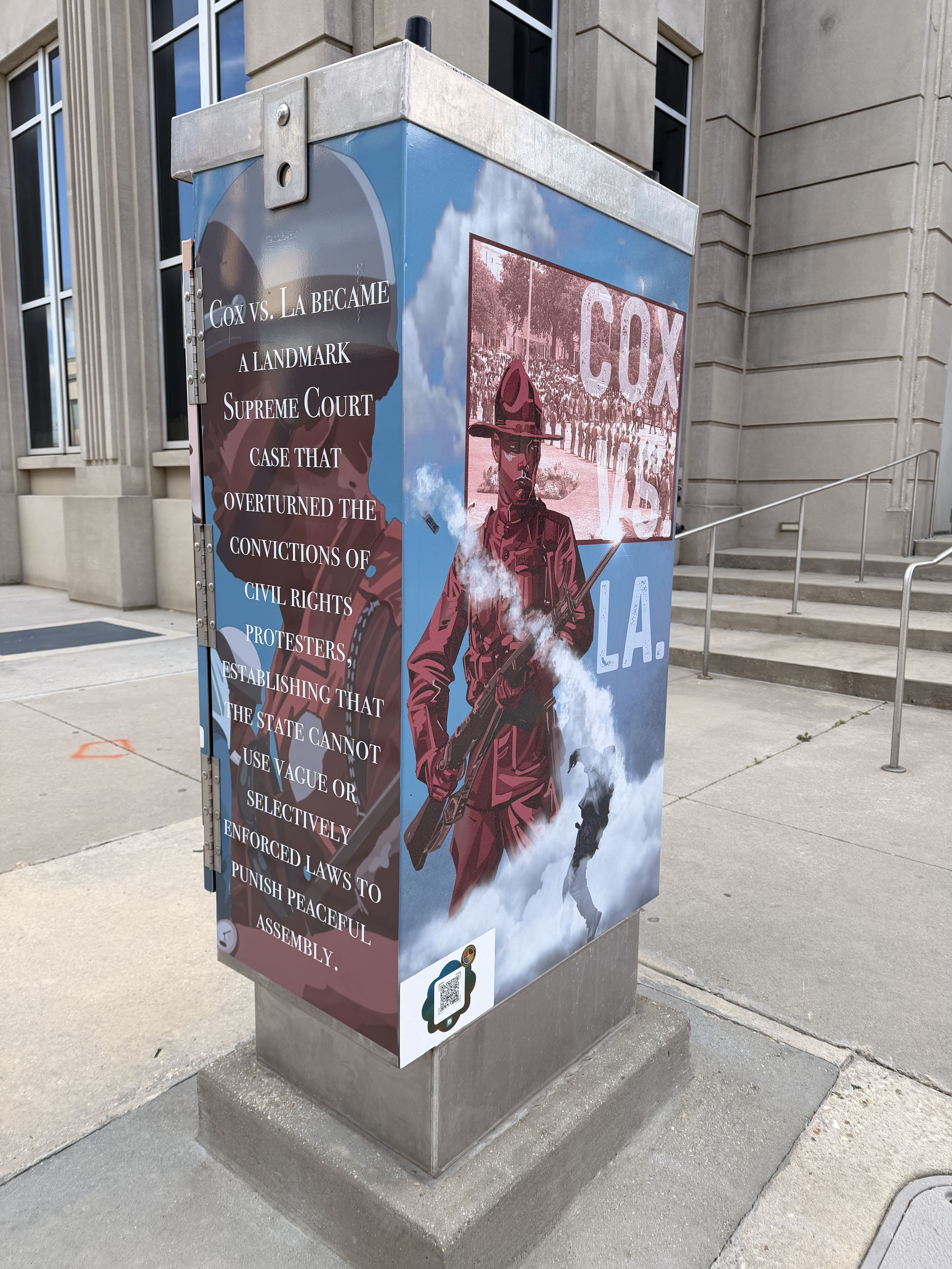
Box 4 - Cox v. Louisiana
Segregation continued as a matter of practice after the U.S. Supreme Court ruling in Garner v. Louisiana on December 11, 1961. Days later, on December 14th, “Twenty-three members of the Baton Rouge Chapter of C.O.R.E. were arrested on charges of illegal picketing. In response, B. Elton Cox and others planned to march through parts of Baton Rouge, ending with a demonstration at the courthouse. An estimated 1,500 to 3,800 protesters demonstrated during the hearings of the 23 jailed members.” The demonstrators were tear gassed and some were arrested. The arrest and conviction of Rev. Cox led to the U. S. Supreme Court case Cox. v. Louisiana (1965) which referred to Garner v. Louisiana (1961) in a similar ruling.
Learn More:
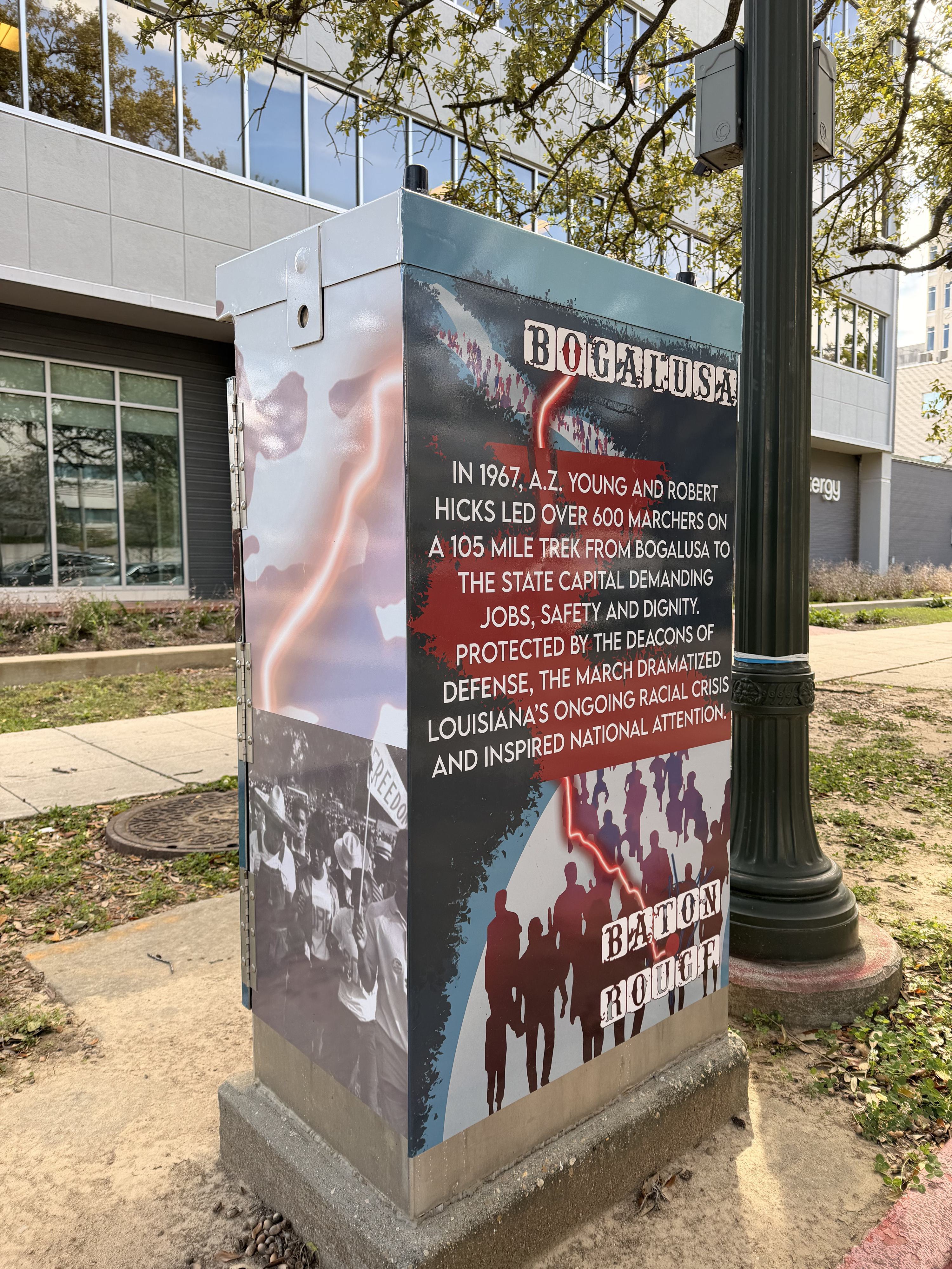
Box 5 - A.Z. Young
A.Z. Young - In 1967, after the Civil Rights Act of 1964, A.Z. Young led over 600 marchers on a 105-mile trek from Bogalusa to the State Capitol, the longest of the Civil Rights Movement, demanding jobs, safety, and dignity. Protected by the Deacons for Defense, the march dramatized Louisiana’s ongoing racial crisis and inspired national attention.
Learn More:
A.Z. Young Interview https://www.crmvet.org/nars/67...
Bogalusa to Baton Rouge March Marker – US Civil Rights Trail
Box 6 - Public Spaces Desegregation
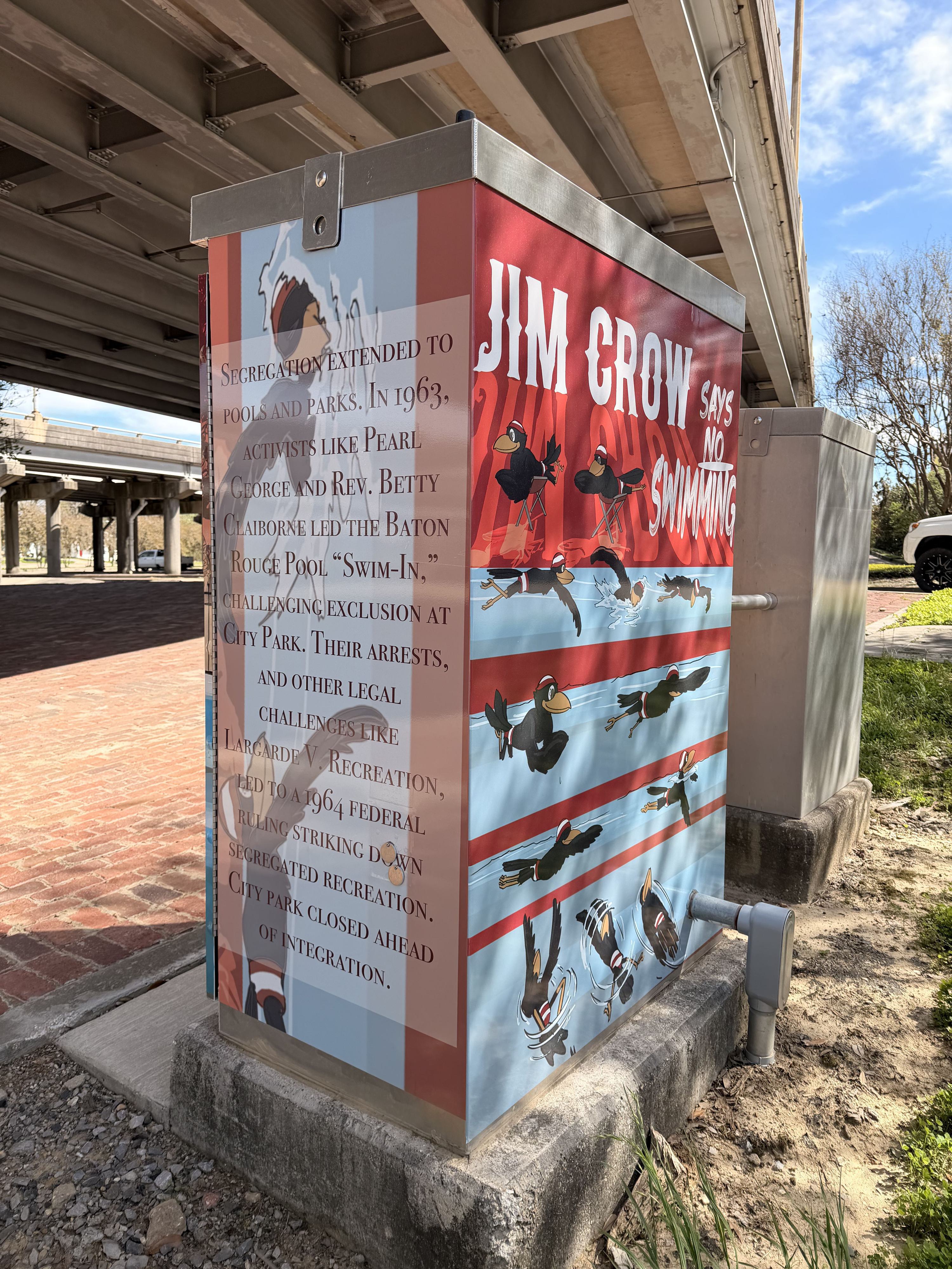
Segregation extended to pools and parks. Black residents were paying property taxes that contributed towards public recreation facilities; however, they could not reap the benefit of their tax dollars spent on these facilities due to segregation. This inequity created dire consequences for the black community, such as drowning, when black youth did not have access to the pool and were often swimming in unsafe conditions in whatever natural bodies of water they could find. In 1963, activists like Pearl George and Rev. Betty Claiborne led the Baton Rouge Pool “Swim -In,” challenging exclusion at City Park. The federal class action Lagarde v. Recreation and Park Commission for Parish of East Baton Rouge was filed in 1953 with Johnnie A. Jones as counsel. “The plaintiffs alleged that they, and other Negroes similarly situated, were being systematically denied the use and enjoyment of the municipally owned and operated recreational facilities in the City of Baton Rouge and the Parish of East Baton Rouge, such as the golf courses, tennis courts, swimming pools, dance pavilions, skating rinks, picnic grounds, etc.” This suit was filed on November 17, 1953, at which time the plaintiffs alleged that they, and other Negroes similarly situated, were being systematically denied the use and enjoyment of the municipally owned and operated recreational facilities in the City of Baton Rouge and the Parish of East Baton Rouge, such as the golf courses, tennis courts, swimming pools, dance pavilions, skating rinks, picnic grounds, etc. This case was ruled on May 18. 1964. The ruling stated, “There is no legal obligation or duty on the part of the City-Parish to provide or operate recreational facilities, but if they do, they cannot provide and maintain them on a racially segregated basis.” Shorty after this case City Park and 9 other public pools in Baton Rouge were closed for the stated reasons of declining revenues and an Alaskan earthquake.
Learn More:
Baton Rouge’s Troubled Waters Documentary (LPB) Brooks Park history
Lagarde v. Recreation & Park Commission for Parish of East Baton Rouge

Box 7 - Social Life and Arts
Beyond politics, culture fueled community pride. The Lincoln, Temple, and Cook Theatres, The Lincoln Hotel, and leaders like Dr. Valerian E. Smith created spaces for joy, artistry, and black excellence.
Lincoln Theatre- The Lincoln Theatre was opened in 1949 by Dr. Aristotle Chatman located at 1305 Mrytle Walk at the corner of Eddie Robertson. The Lincoln Theatre closed in the mid 80’s. The Lincoln Theatre will be reopening in 2026 and will house the Black History Hall of Fame, and once again serve as a community and entertainment hub.
The Lincoln Theatre is on the National Register of Historic Places. According to the City Directory, the United Defense League was housed for one year in office space at The Lincoln Theatre in 1955.
Learn More:
https://lbhhf.org/about-the-hi...
https://npgallery.nps.gov/GetA...
Temple Theatre – located in the Prince Hall Masonic Temple 1335 N. Blvd. The Temple Theatre was located on the 1 st and 2 nd floors of the Prince Hall Masonic Temple which was built in 1924 at 1335 N. Boulevard. The construction of Prince Hall Masonic Temple was authorized in 1923 under the leadership of B.V. Baranco of the Grand United Order of Odd Fellows. The Prince Hall Masonic building is on the National Register of Historic Places. Another venue located in the Prince Hall Masonic Temple was the Temple Roof Garden, a ballroom that was located on the 4 th floor of the Prince Hall Masonic Temple. Youth clubs would often have someone spin records and the Temple Roof Garden for dances. Big name acts of the day, such as Duke Ellington, Louis Armstrong, Cab Calloway, Fats Waller and others performed at the Temple Roof Garden. Two other theaters that served blacks were the Grand which according to city directories closed in 1936, and McKinley which opened in the same year.
Learn More:
https://npgallery.nps.gov/NRHP...
https://www.creolegen.org/2013... anco-sr-1869-1933/
Lincoln Hotel - The Lincoln Hotel opened in August of 1955. It was a four-story hotel that had 46 rooms with bathrooms and was air-conditioned throughout and included a dining room. Air conditioning, especially for black-owned businesses at that time, was a rarity. Many of the large names that performed at the Lincoln Theatre, the Temple Theatre and other venues stayed at the Lincoln Hotel because segregation prevented them for staying at white hotels. The Lincoln Hotel was listed in the Green Book from 1957 -1967.
Learn More:
https://ladigitalmedia.org/vid...
Cook’s Theatre - The Cook Theatre was originally opened in 1935 at 8254 Scenic Highway; the theater was a wooden structure that may have previously served as the Cook Family Blacksmith’s shop.
Learn More:
Dr. Valerian Smith - Dr. Valerian Smith was a dentist, originally from Charleston, West Virginia, he completed his undergraduate and professional degrees at Howard University. He located his dental practice in South Baton Rouge and provided low cost or no cost dental services to those in need. He was also a musician and playwright having founded the Baton Rouge Community Chorus, a musical theatrical performing group. He was a member of Psi Phi Fraternity.
Learn More:
https://ladigitalmedia.org/vid...
Current Black Owned Businesses In Baton Rouge

Box 8 - Firsts
Baton Rouge produced black excellence that contributed to the Civil Rights Movement and some of these people include local trailblazers, such as:
Joseph (Joe) Delpit – Joe Delpit’s father, Tommy Delpit started The Chicken Shack in 1935. Joe had early exposure to the family business and learned about life and politics as a child. As a teenager, he had the occasion in 1953 to deliver chicken to Rev. T.J. Jemison. He then became involved in the Baton Rouge Bus Boycott of 1953 as a driver in the free ride carpool. Later, Joe Delpit, with the encouragement of people such as Rev. T.J. Jemison and others, ran for office, became the first Black Councilperson in Baton Rouge in 1968. Then in 1975, he ran and was elected as a Louisiana State Representative for District 67. He served four consecutive terms as a Louisiana State Representative. “On March 12, 1984, he was elected Speaker Pro Tempore of the Louisiana House of Representatives, making him the highest -ranking Black elected official in the State of Louisiana and the first Black to hold this office.”
Learn More:
https://lapoliticalmuseum.com/...
Horatio Thompson - “Horatio Thompson was the first black man to own an Esso Service station in the South.” He fueled the Baton Rouge Bus Boycott by providing gas at cost to the drivers in the free ride carpool. The bus company was severely financially impacted during the approximate weeklong bus boycott. Horatio Thompson helped to fuel the cars owned by Black drivers so that Blacks that were dependent on the bus could reach their destinations, thus creating economic disruption for the bus company, while maintaining a system of transit for the black community with resources that were within the community; this required organizing and collective action across class lines within the Black community. Horatio Thompson was a founding member of St. Michael’s Episcopal Church where he served in various capacities for more than 70 years. “He held offices and membership in over 50 organizations and corporate boards and was a charter member of Alpha Sigma Chapter of Kappa Alpha Psi.
Learn More:
https://ladigitalmedia.org/vid...
https://www.legacy.com/us/obit... 1
Alexander Pierre (A.P.) Tureaud, Jr. - Alexander Pierre “A.P.” Tureaud, Jr. was the first Black undergraduate to attend LSU. His father, A.P. Tureaud, Sr. was a civil rights attorney, who fought segregation. A. P. Tureaud, Jr. applied to attend L.S.U. He received a letter denying his admittance. A.P. Tureaud, Sr, filed a class action lawsuit titled Tureaud v. Board of Supervisors of Louisiana State University and Agricultural and Mechanical College, et.al. on September 11, 1953. This came right on the heels of the Baton Rouge Bus Boycott which occurred in June of the same year. A.P. Tureaud, Jr., was allowed to attend L.S.U. while the case was under review; however, due to a court injunction, he was expelled after 55 days of attendance which was appealed and he was allowed to return while the case was still under judicial review. A.P. Tureaud chose to not return to LSU because of the unpleasant and unwelcome experience that he had there. He subsequently enrolled at the Catholic HBCU, Xavier University, in New Orleans and enjoyed his experience there. A.P. Tureaud subsequently pursued graduate studies at Columbia University in New York and earned a master’s degree in Rehabilitation Counseling.
Learn More:
https://www.lsualumni.org/blog...
https://www.wafb.com/2023/03/1...
https://law.justia.com/cases/f...
https://lib.lsu.edu/sites/defa...
https://press-herald.com/black...
Rev. Arthur Jelks – Rev. Arthur Jelks was the President of the Baton Rouge NAACP and was the Pastor of Green Chapel African Methodist Episcopal Church. He was a leader in the Baton Rouge Swim-In and worked to desegregate the schools. He was originally from Uchee, Alabama. Prior to moving to Baton Rouge and becoming the President of the Baton Rouge Chapter of the NAACP, he was involved in school desegregation efforts in Cairo, Illinois as the President of the NAACP. He was also involved in civil rights advocacy in Evansville, Ind. Elkhart, Ind. and Michigan
Learn More:
https://dnrhistoric.illinois.g...
https://batonrougedigitalarchi...

Box 9 - Churches as Anchors
From organizing carpools to hosting mass meetings, churches were movement headquarters, Mt. Zion, Shiloh, Bethel AME and Wesley United Methodist nurtured leaders, built resilience and became sanctuaries of both faith and strategy.
Micah 6: 8 “He has shown you, O mortal, what is good, And what does the Lord require of you? To act justly and to love mercy and to walk humbly with your God.”
Mt. Zion First Baptist - Mt. Zion First African Baptist Church was established in 1858 by Pastor Isaac Palmer, a Black minister and Pastor John Brady, a white minister. This was prior to the Civil War which began in 1861. The beginning congregation consisted of eight others, three whose names were recorded: Henry Strong, Silas Green and Martha Hinton. Rev. T.J. Jemison became the Pastor of Mt. Zion in 1949. In 1950 the City Council revoked the licenses of about 40 black-owned bus companies. This created an intentional monopoly. “Full and fair” services for all were pledged; however, that could not exist due to segregation. Three years later the bus fare increased. Rev. T.J. Jemison approached the City Council and within two weeks of the increase, Ordinance 222 passed unanimously without noted opposition and with the full support of the bus company. This ordinance allowed riders to fill the bus on a first come, first served basis, Blacks from the back and whites from the front. For three months the bus drivers refused to honor Ordinance 222. Rev. Jemison and the head of the local NAACP advised riders of their new rights. From this informed ridership came forth Martha White, who sat down and refused to give up her seat. She was threatened with arrest when demanded by the bus driver to get up. There were other ladies on the bus that joined saying they were going to stick together. Ordinance 222 was upheld and the driver suspended. This led to a 4-day strike by the bus drivers who were in violation of Ordinance 222. They sought the support of the Louisiana Attorney General who issued an opinion that the ordinance violated Louisiana’s segregation laws and overturned it. The response from the black community was the Baton Rouge Bus Boycott that was led by Rev. T. J. Jemison.
Rev. Jemison was voted Pastor Emeritus of Mt. Zion First Baptist Church and subsequently retired on October 5, 2003.
Learn More:
https://www.mtzionfirstbaptist...
Wesley United Methodist - “According to church history, Wesley’s first church building was constructed in 1866 when newly emancipated slaves “removed themselves from the balcony of First Methodist Church,” then located at Laurel and Fourth Streets. Church forefathers built the first Wesley church themselves, cutting down trees which they floated on the Mississippi River to the foot of Government Street. This modest wooden structure was destroyed by a storm in 1882. A second structure, which was ultimately destroyed by fire, actually housed the area’s first public school for African Americans. Blunden School and Orphanage for homeless children had its beginnings in the building.”
Learn More:
https://www.la-umc.org/churchh...
Bethel AME – “Bethel’s beginnings trace back to gatherings in the homes of Norman and Catherine Hearns and a group of dedicated families. Under the leadership of Rev. George Gordon, this fellowship formally entered the African Methodist Episcopal Church, and in 1896, Rev. J.N. Washington oversaw its incorporation. From its first home at 520 Hypolite Street (now North Sixth Street) in downtown Baton Rouge, the church flourished. In 1927, the trustees resolved to purchase land at the corner of South Boulevard and South 14th Street. Under Rev. H.B. Hitchens, a new church building was erected in 1954, built through cash donations, volunteer labor from members and friends, and the dedicated efforts of the congregation. In 1957, Bethel moved from its original site to its current home at 1358 South Boulevard where it has stood for over 158 years as a beacon of worship and community support.”
Shiloh Baptist Church - Shiloh Baptist Church was organized by Rev. George Byrd in 1872. The first location was on Boyd Avenue in Spanish Town. In 1906, Rev. Jack Mitchell becomes the pastor. It was during
his time as pastor that the church moved from Boyd Avenue to 14 th Street. The present-day church was constructed between 1972-1980 and is located on 14 th Street.
Learn More:
https://shilohbr.com/our-histo...
Current Faith Based Organizing in Baton Rouge
Box 10 - Voter Rights Advocacy/Youth Advocacy
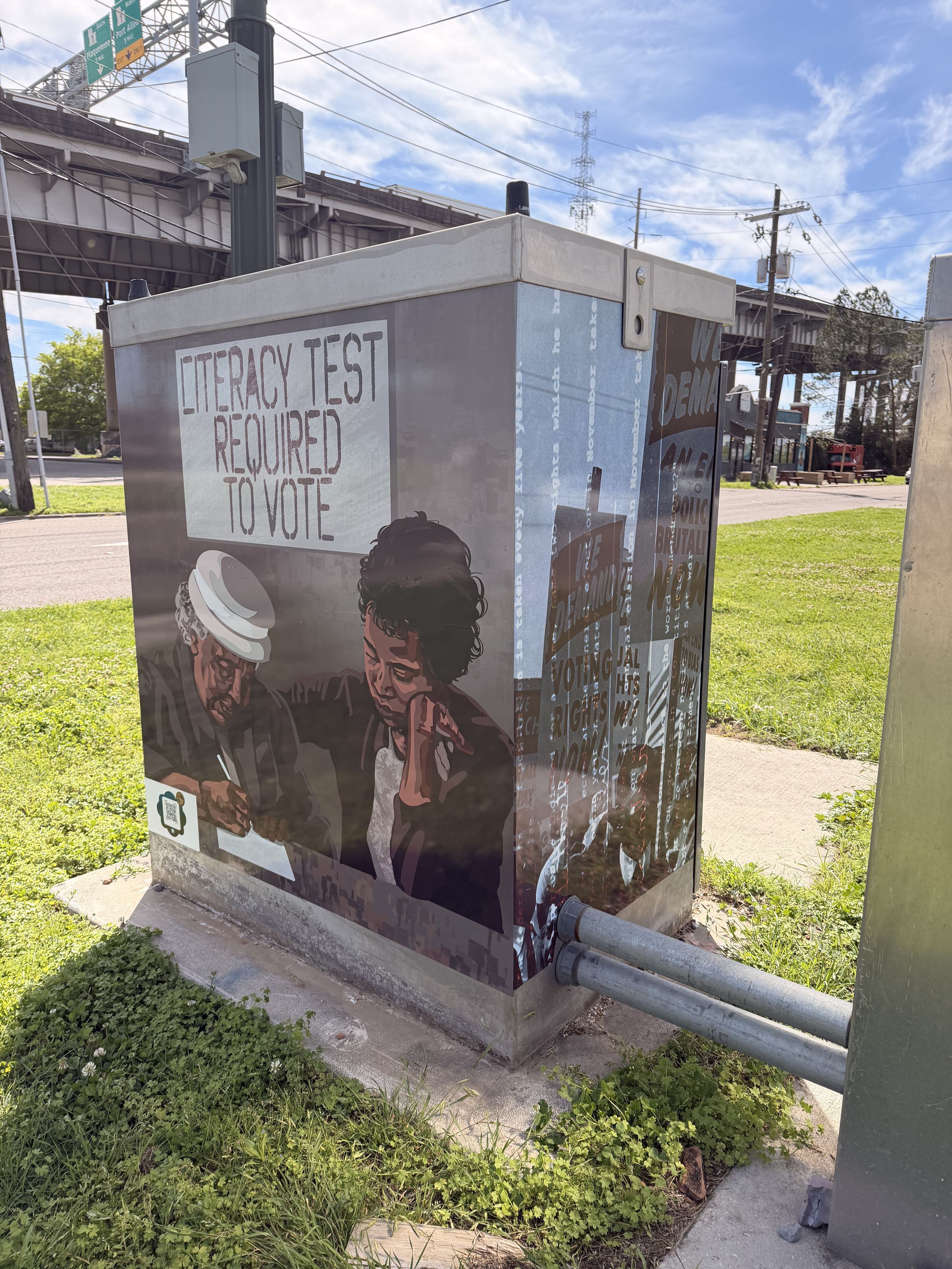
Education has been vital to the Civil Rights Movement, whether that was through the founding of Southern University, Southern Law School, now Southern Law Center and Voter’s Leagues. Charles Hatfield, a Baton Rouge native and Xavier graduate, applied to LSU law school and was denied admittance to maintain racial segregation. A.P. Tureaud Sr., Louis Berry, Antonio Thornton and Thurgood Marshal filed suit on Hatfield’s behalf. The state provided a separate, but equal solution, thus Southern Law School opened in September 1947, a year after the legal action. Hatfield was threatened by segregationists, left the state and abandoned his plans to become a lawyer; however, his actions would pave the way for many others. While the intent of the state in creating a “separate, but equal” law school, was to prevent desegregation, it spurred the cause of desegregation, as students and young lawyers were now armed with the law and better equipped to fight discrimination. The first Southern Law School graduating class was in 1950, consisting of Jesse N. Stone, Alex Louis Pitcher, Alvin B. Jones, Ellyson F. Dyson and Leroy White. Johnnie A. Jones was soon to follow and graduated in 1953 and was quickly ushered into the Civil Rights Movement in Baton Rouge with the Baton Rouge Bus Boycott. Seven years later, the Baton Rouge Sit-Ins occurred in 1960 consisting of both law students and undergraduate students. The students that participated in the sit-ins were indefinitely suspended from Southern University and Southern Law School. While the Civil Rights Movement was intergenerational, young people played a crucial role armed with education and energy to challenge systemic and institutionalized discrimination. Education and a growing black middle class consisting of both white- and blue-collar workers that were seeking communal uplift provided the resources that were needed, such as cars, drivers and gas to create a Free Ride System during the Baton Rouge Bus Boycott. The cause of the Civil Rights Movement was to achieve equal rights and protection.
Gus Young - A leader in black voter rights in Baton Rouge was Gus Young. He paved the way as he was one of three Blacks allowed to register to vote in East Baton Rouge Parish in 1932. Gus Young served on the board of directors for the Baton Rouge National Association of Colored People, as well as the Baton Rouge Bi-Racial Committee. He was the founder of the First Ward Voters League in which other organizations would later consolidate under the umbrella of the First Ward Voters League to become Eden Park .
Rev. Dr. Ulas Hayes – Rev. Dr. Ulas Hayes was the President of the First Ward Voters League from the late 50’s till his death in 1990. He was born in Zachary, Louisiana to the union of Bennie and Elizabeth Williams Hayes. His father, Bennie Hayes owned Hayes Grocery Store, a Beauty Salon and Night Club in Scotlandville. Rev. Dr. Ulas Hayes was instrumental in the Baton Rouge Bus Boycott of 1953, as well as later advising Dr. Martin Luther King on how to conduct a bus boycott. He served as a “Minister, Politician and prominent Civil Rights Leader who led the fight against segregation and other forms of racism in Baton Rouge.”
Learn More:
https://batonrougedigitalarchi...
https://batonrougedigitalarchi...
Hazel Freeman - Hazel Freeman was the secretary of the Second Ward Voters League. She was a graduate of McKinley High School and attended Southern University receiving a B. A. in Education. She attended Columbia University Teachers College in New York and received a master’s degree. Ms. Freeman served as a teacher and Supervisor of Child Welfare and Attendance in the East Baton Rouge Parish School System. She was the founder of the Community Association for the Welfare of School Children. Ms. Freeman was a member of professional organizations, including the LEA, NEA and Educators of Yesteryear. She attended Mt. Zion First Baptist Church and ministered in many capacities including as Deaconess. Ms. Freeman was a lifelong member of Delta Sigma Theta.
Learn More:
https://www.legacy.com/us/obit...
Acie Belton - Acie Belton was from a small town in Sabine Parish and relocated to Scotlandville after he was discharged from the U.S. Army in 1946. He was the President of the Second Ward Voters League and was instrumental in its formation. The Second Ward Voters League registered thousands of black voters beginning in the late 1940’s and lasting into the 1990’s. “Belton sat on various state and local commissions during the 1960’s and 1970’s that created employment opportunities for minorities.” He was also member of the East Baton Rouge Parish School Board and served an appointed term on the Metro Council. He was a member of Camphor United Memorial Methodist Church, Bonnette Harrison American Legion Post 502 and AARP Chapter 1828.
Learn More:
https://batonrougedigitalarchi...
Willis Reed Sr. - Willis Reed, Sr. was the President of the First Ward Voters League. He played a central role in organizing the Boycott Baton Rouge Bus Boycott of 1953. He would later become the publisher and editor for the Baton Rouge Post (1982-2007). His grandson Marlon Reed stated that his grandfather’s “love for the Baton Rouge Post grew out of his strong feelings that there were stories that needed to be told to black readers in the community and he was the man for the job.”
Learn More: